History
The concept of the existence of pheromones in insects has its roots in the late 19th — early 20th century. The great entomologist from France, Jean-Henri Fabre, became the discoverer of this phenomenon. After being suspended from teaching duties for reformist views and statements about education, the scientist bought a plot of land, which he eventually turned into a laboratory. Darwin spoke highly of the scientist and emphasised his unsurpassed powers of observation. It is to Fabre’s observation that we owe the appearance of pheromone traps. One day Jean Henri Fabre was watching a pear-shaped Peacock and noticed that the female was able to attract males at a fairly large distance.
Later, when studying this feature, it was found that during the period of fertility, from the glands on her body, the female secretes substances that attract males imago — pheromones. Interestingly, males are able to cover a distance of several kilometres by chemotaxis determining the position of the female.
The foundation laid by Fabre became the basis for future research, which led to the synthesis of the first attractants. At the moment, the pheromone trap is definitely a “must have» in the agricultural industry.
Principle of operation
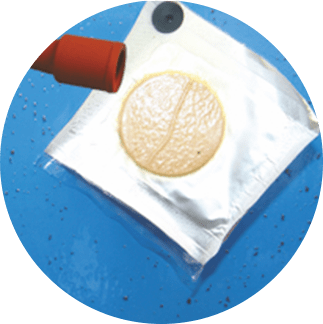
Traps are used to attract insects of various species with the help of pheromones produced by female individuals. Considering that the communicative abilities of insects are often based on the influence of some stimulus, this method of trapping and monitoring, due to its ease of use, has become an indispensable assistant for farmers. According to the principle of action, they can be divided into attracting and repelling. To monitor the pest, it is more effective to use pheromone traps that attract males. The male arrives at the smell of the attractant, after which he is caught on a sticky surface or water.
This type of monitoring is absolutely safe and does not cause any harm to plants and useful insects.
In addition to trapping pests to analyse the existing threat, traps act as a disorientation of males. Under the influence of pheromones, males pay less attention to females, which leads to a decrease in the population. With a small amount of pest, it may well replace the use of insecticides.
Easy to use
Using pheromone traps is simple, there are no clear rules on this, only some recommendations.
The work of pheromones is based on smell, so it is better to fill the trap on the street or in a room with a good air supply. It is also important to monitor the ingress of the substance on your hands and wash them thoroughly. It does not pose a danger to life, but we do not think that anyone can be attracted by the opportunity to become an object of sexual desire for insects.
It is customary to place traps at a height of about 1.5 metres, with the ends facing the wind. This will further stimulate the ingress of insects moving in the air currents.
Control the clogging of the sticky panels and change them if necessary, also change the pheromone after 4-5 weeks of use.
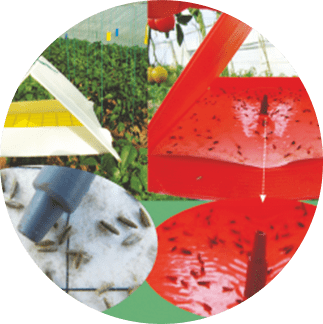
Types of traps:
Recommendations for use:
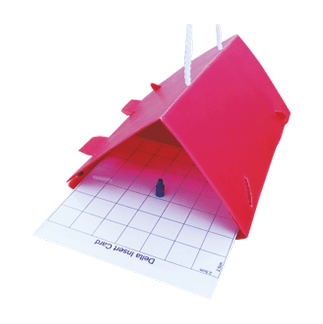
Delta-shaped pheromone traps in the greenhouse are recommended to be placed a week before planting. To monitor the pest, it is enough to use 4-6 deltoid pheromone traps per hectare and change the pheromone every 4-5 weeks.
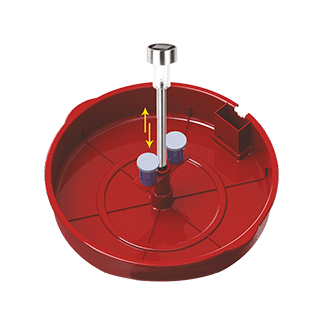
Water pheromone traps are a plate with a pheromone container in the centre. It is recommended to use 10 pieces per 1 hectare for monitoring. Pheromone traps are placed around the circumference, observing the distance between them of at least 15 metres, while the distance between the traps and the walls of the greenhouse should be about 25 metres to avoid attracting new insects from the outside. The plate is filled with a liquid to which oil is added, covering the surface with a thin layer. The active pheromone attracts adult males into a trap, which, once in the water, cannot get out due to the fatty film on the surface. After that, the insects are caught for further analysis of the threat assessment and preparation of a counteraction plan.